
Pickup trucks for sale
Shop new & used trucks for sale
Popular truck searches
Truck brands
Cab styles
Trucks by popular city
Popular new trucks for sale
Popular used trucks for sale
Electric & hybrid trucks for sale
Used trucks by price
- Used trucks for sale under $1,000
- Used trucks for sale under $2,000
- Used trucks for sale under $2,500
- Used trucks for sale under $3,000
- Used trucks for sale under $4,000
- Used trucks for sale under $5,000
- Used trucks for sale under $6,000
- Used trucks for sale under $7,000
- Used trucks for sale under $8,000
- Used trucks for sale under $9,000
- Used trucks for sale under $10,000
- Used trucks for sale under $15,000
- Used trucks for sale under $20,000
- Used trucks for sale under $25,000
- Used trucks for sale under $30,000
- Used trucks for sale under $40,000
- Used trucks for sale under $50,000
- Used trucks for sale under $100,000
Research popular truck models
News & tips when buying a truck



Pickup truck FAQ
What are the differences between cab types?
A regular cab only has one row of seats and limited interior storage, while an extended cab has two rows of seats and also comes with small secondary doors. A crew cab has four full-size doors and is designed to haul up to six occupants while also giving more room for interior storage. A Mega Cab is exclusive to Ram 2500 and 3500 trucks and increases the amount of interior space for passengers and cargo compared to a crew cab but comes with only one bed length.
What are the differences between bed lengths?
As the names imply, the length of a pickup truck's bed (also called a box) is the key differentiator between the three. While not universal, a short bed is typically around 5.5 feet long and is commonly found on most crew cab pickups. A standard bed is usually 6.5-feet long, while a long bed is in excess of eight feet; exact dimensions may vary, and not every truck offers each bed style.
What is payload capacity?
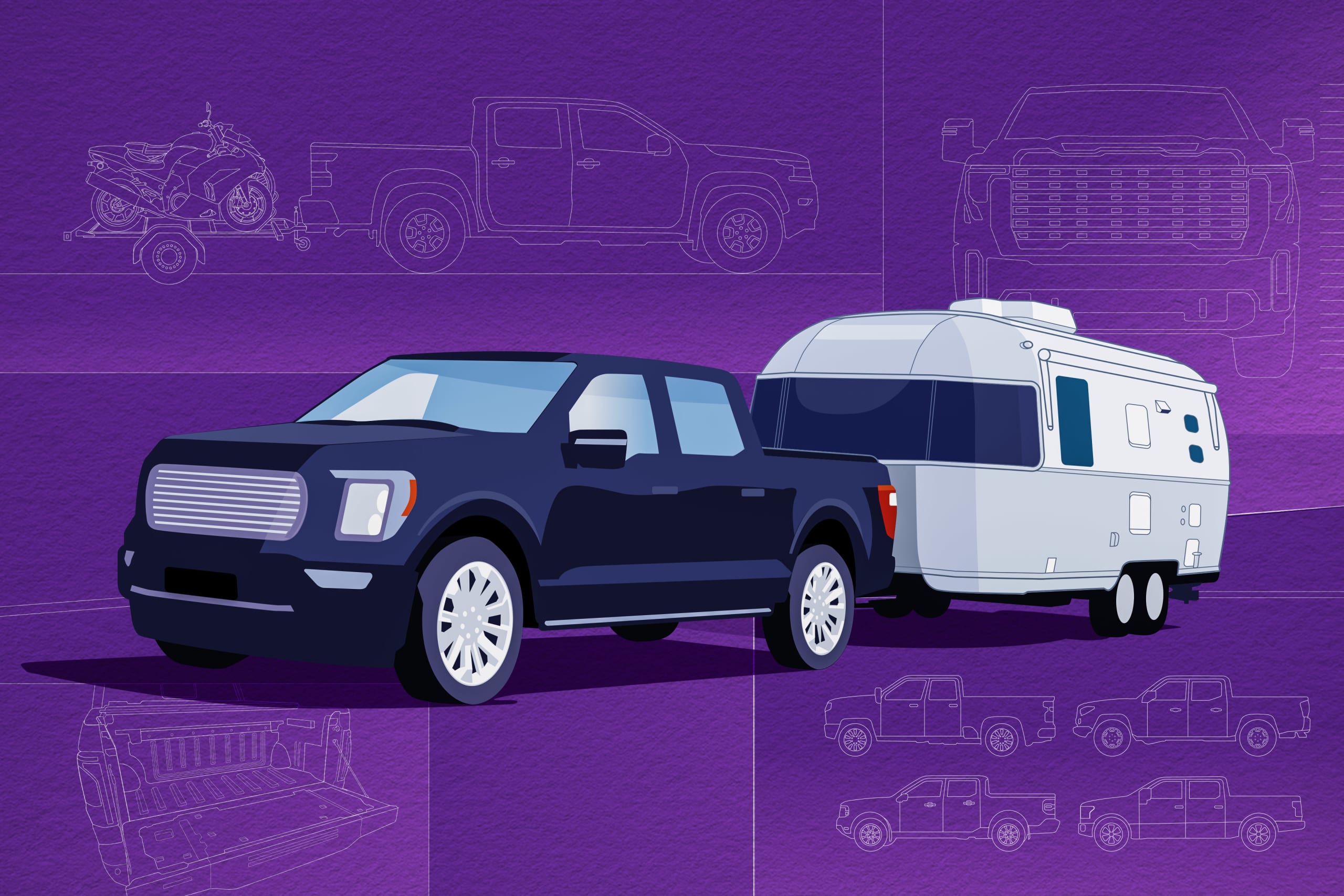
Payload capacity is the maximum weight a pickup can carry, including passengers, cargo and trailer tongue weight when towing. These categories all count as payload: the more passengers you haul, the less cargo you can carry and vice versa. If you exceed the payload limit, it puts more strain on the engine and causes increased wear and tear of various components, including the brakes and the suspension.
How do I find a pickup truck's towing capacity?
A pickup's towing capacity (along with other load-carrying-related information) is typically found on a label posted either on the driver's door or on the door jamb itself. However, some automakers will include the information in the owner's manual or require customers to go online to look up the exact capacities of their pickup truck.
Do I need a weight-distribution hitch to tow?
Most automakers recommend using a weight distribution hitch when towing over a predetermined amount. For example, Ford and Ram say that one should be used when towing over 5,000 lbs or a tongue weight that exceeds 500 lbs. This is because properly distributing the load helps maximize the amount of control a driver has by putting the load back on the front wheels. A trailer might shift too much weight to the rear, which impairs handling and braking.
Can electric pickup trucks tow?
Electric pickup offerings like the Ford F-150 Lightning and Rivian R1T can tow just like a gasoline-powered pickup. However, their electrified powertrains are not immune to the extra strain towing a big load can bring, and that shows up in decreased range; we observed about half the range while towing with an F-150 Lightning versus when the truck was not towing anything. If you need to tow with your EV pickup, have a route plan in place to ensure you can find charging stations at key points on your trip before you resume your journey.
Learn more about pickup trucks
Best Pickup Truck of 2023
See which trucks were nominated and which model won the grand prize.
View the best pickup truck2021 Ford F-150 ownership
Follow our 2021 Ford F-150 ownership experience.
Learn about our 2021 F-150